


When undertaking large-scale construction projects in the industrial sector, ensuring structural integrity, durability, and safety is of paramount importance. Industrial steel structures serve as the foundational backbone for modern factories, warehouses, processing plants, and energy facilities. Achieving the necessary performance levels requires strict adherence to rigorous engineering guidelines throughout the entire production lifecycle. Sir and Madam readers, understanding these foundational principles helps project owners, engineers, and contractors evaluate quality and compliance more effectively. From raw material selection to final assembly, every single phase involves specific parameters that dictate whether a structural component will withstand environmental loads, operational stresses, and the passage of time.
Context and the Importance of Technical Standards in Steel Structures
The rapid expansion of modern industrialization has driven a significant surge in the demand for pre-engineered steel buildings and heavy industrial frameworks. Unlike traditional construction methods, steel structures offer remarkable flexibility, rapid erection times, and impressive load-bearing capacities. However, these advantages can only be fully realized when fabrication processes strictly follow established technical standards. Technical standards act as a universal language between designers, fabricators, and quality control inspectors, ensuring that every beam, column, and truss performs precisely as engineered.
Without comprehensive technical specifications, variations in material quality or fabrication tolerances could lead to severe structural failures under heavy loads or seismic activity. Standards dictate the minimum yield strengths, acceptable welding procedures, dimensional tolerances, and protective coating thicknesses required for specific operational environments. Consequently, maintaining strict compliance with these benchmarks safeguards both human capital and substantial financial investments in industrial facilities.
Important Technical Requirements During the Fabrication Process
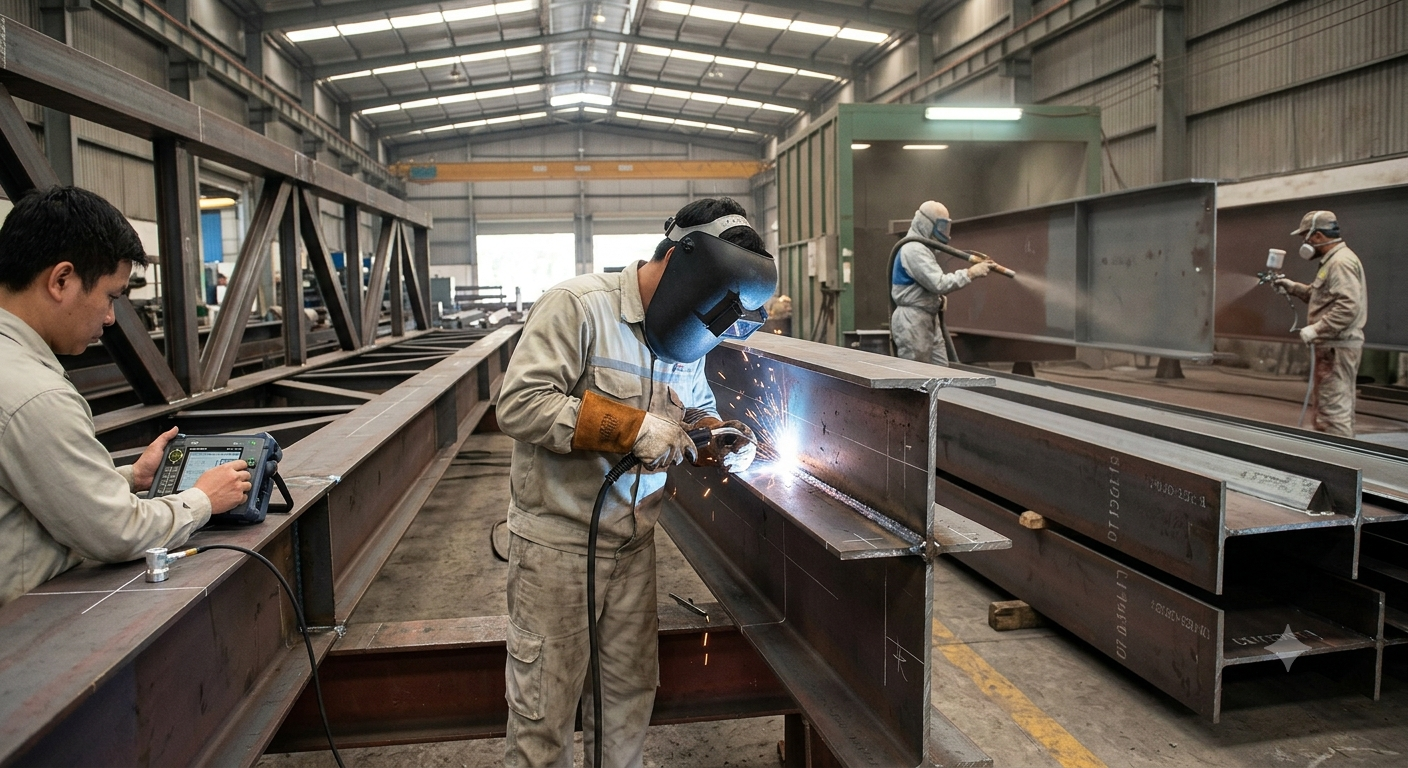
The manufacturing journey of any steel framework involves multiple sophisticated stages, each demanding meticulous attention to detail and adherence to engineering drawings. Below are the core technical areas that require rigorous control.
Requirements for Input Materials and Steel Standards
The quality of a finished steel structure depends heavily on the raw materials utilized at the very beginning of the production cycle. Steel plates, sections, and structural profiles must originate from reputable manufacturers and comply with recognized international or national standards, such as ASTM, JIS, or EN grades. Mill test certificates are mandatory to verify the chemical composition and mechanical properties of the steel, including yield strength, tensile strength, and elongation percentages.
Furthermore, visual and ultrasonic inspections are frequently conducted on incoming steel plates to detect internal defects such as laminations, inclusions, or micro-cracks. Using substandard or uncertified steel compromises the entire load path of a facility, making material verification a non-negotiable first step in quality assurance.
Requirements for Precision in Mechanical Machining
Dimensional accuracy is vital when individual steel components must fit together seamlessly on the construction site. Modern fabrication facilities utilize advanced computer numerical control machinery, including plasma cutting, laser cutting, and automated drilling lines, to achieve high levels of precision. Tolerances for length, width, straightness, and hole placements are typically measured in fractions of a millimeter.
If cutting or drilling inaccuracies occur, structural members may experience induced stresses during assembly, or field bolting may become exceedingly difficult. Maintaining tight mechanical tolerances ensures that connections align perfectly, load transfers occur smoothly along the intended vectors, and overall structural stability remains uncompromised.
Requirements for Welding Technology and Weld Inspection
Welding is arguably the most critical joining method in steel fabrication, as it unites discrete plates and profiles into a monolithic load-bearing assembly. Welders must hold valid certifications for specific welding positions and processes, such as shielded metal arc welding, gas metal arc welding, or flux-cored arc welding. Welding procedures must be qualified beforehand through rigorous testing to ensure appropriate heat input, penetration, and mechanical strength.
Because welds represent potential points of stress concentration, non-destructive testing plays a vital role in quality verification. Depending on the structural importance of the joint, inspectors utilize visual examination, ultrasonic testing, magnetic particle testing, or radiographic testing to detect internal flaws like porosity, lack of fusion, or micro-cracking.
Requirements for Surface Treatment and Anti-Corrosion Protection
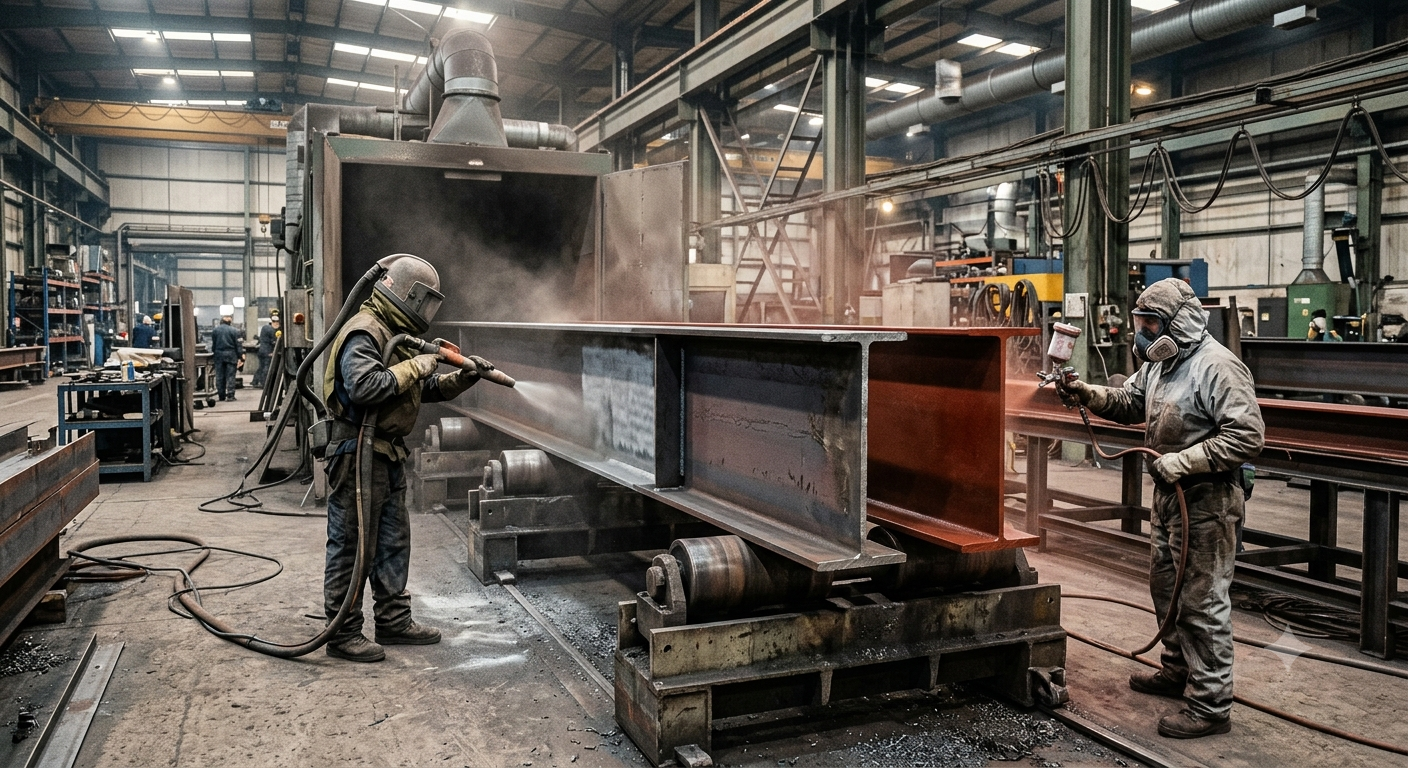
Industrial environments often expose steel structures to moisture, chemical fumes, high humidity, and temperature fluctuations, all of which accelerate corrosion and degradation. Effective surface preparation and protective coatings are essential to extend the operational lifespan of the facility significantly.
The Abrasive Blasting Process for Surface Cleaning
Before any protective coating can adhere properly to raw steel, the surface must undergo thorough preparation to remove mill scale, rust, oil, grease, and other contaminants. Abrasive blasting, often utilizing steel grit or shot, is the industry-standard method for achieving this. The blasting process not only cleans the metal but also creates a specific surface profile or anchor pattern, which mechanically enhances the adhesion of subsequent primer coats.
Environmental conditions during abrasive blasting and coating application, such as ambient temperature and relative humidity, must be closely monitored to prevent flash rusting before the primer is applied.
Protective Coating and Fireproofing Systems
Once the steel surface is cleaned and profiled, a multi-layer coating system is applied sequentially. This typically consists of an epoxy zinc-rich primer for sacrificial corrosion protection, an intermediate build coat, and a durable topcoat resistant to UV radiation and atmospheric weathering. For facilities with stringent safety requirements, intumescent or cementitious fireproofing materials are also applied to insulate the steel and maintain its structural integrity during elevated temperatures in the event of a fire.
Frequently Asked Questions About Technical Requirements for Steel Structures
Conclusion and Key Considerations When Implementing Projects
In summary, the successful execution of industrial steel structure projects relies heavily on strict adherence to technical requirements across every phase, from raw material sourcing and precise mechanical machining to advanced welding and protective coating applications. Project stakeholders must prioritize quality control measures, partner with experienced fabricators, and maintain clear communication channels to address potential challenges early. By upholding these rigorous engineering standards, investors can ensure the long-term safety, durability, and efficiency of their industrial facilities.
Contact information
CÔNG TY TNHH SẢN XUẤT & XÂY DỰNG AP
Address: 348/9 Ung Văn Khiêm, phường Thạnh Mỹ Tây, TP.HCM.
Hotline: 028 7300 3868
Email: design-quotation@apmnc.net, business@apmnc.net
Website: apmnc.net