


Dear Sir or Madam, when looking into modern industrial construction, understanding how raw steel plates and sections transform into precise, durable components can provide great clarity for your upcoming projects. Whether you are planning a large manufacturing facility, a warehouse, or industrial steel structures, the manufacturing phase inside a specialized factory is where design turns into physical reality. This article walks you through the comprehensive workflow, detailing how meticulous engineering, advanced machinery, and rigorous quality controls ensure that every structural element meets the highest standards of safety and durability.
Initial Technical Design Drawings and Material Breakdown
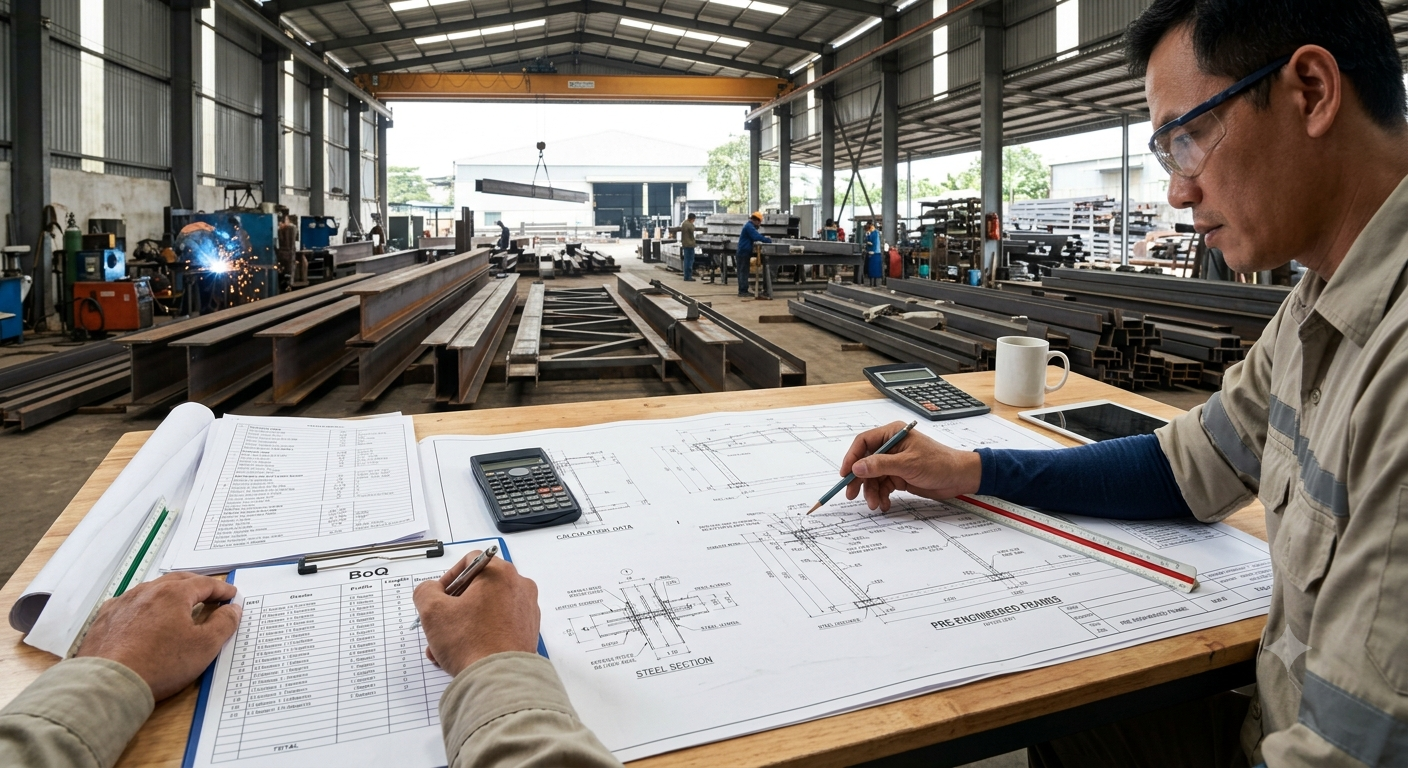
Every successful construction project begins long before any metal is cut. The foundation of precise manufacturing lies in translating architectural and engineering concepts into comprehensive shop drawings that guide every subsequent step in the plant.
Receiving Drawings and Technical Handover
Upon securing a project contract, the factory engineering team receives the approved architectural and structural drawings from the design consultants or clients. During this phase, senior engineers conduct a thorough constructability review. They examine connection details, load-bearing capacities, dimensional tolerances, and any specific client requirements. This technical handover ensures that the production department fully understands the design intent, potential clash points, and specific welding or bolting requirements before any physical work begins.
Quantity Takeoff and Material Planning
Once the design is validated, the detailing team utilizes specialized building information modeling and computer-aided design software to perform a precise material takeoff. This process calculates the exact tonnage, grades, thicknesses, and lengths of steel plates, H-beams, I-beams, and channels required. Concurrently, the procurement and planning department schedules material sourcing, ensuring that certified steel plates and structural profiles arrive at the plant on schedule while minimizing scrap waste through efficient nesting software.
Rough Machining and Component Formation
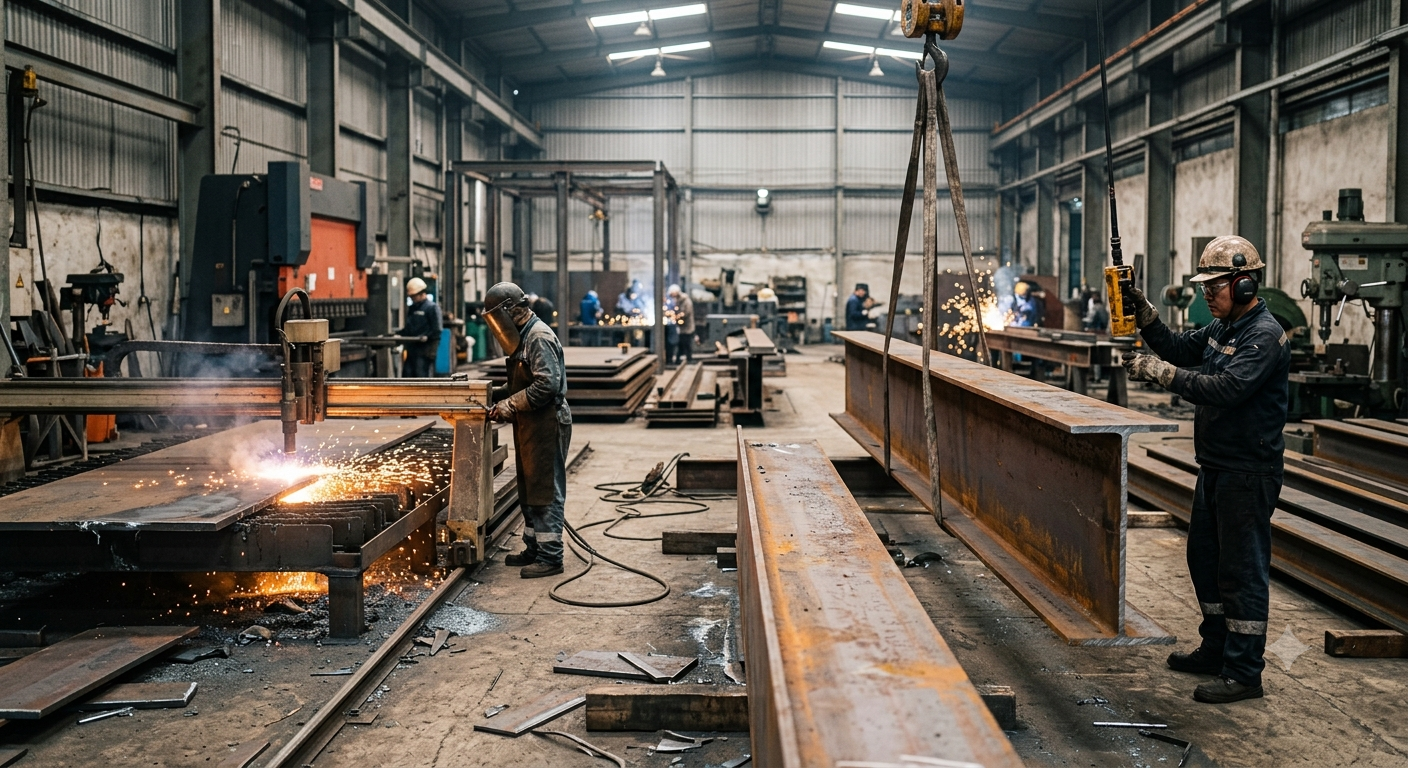
With approved shop drawings and raw materials ready, the production floor initiates the physical transformation of steel. This stage converts flat plates and long profiles into distinct structural members such as columns, rafters, and beams.
Cutting, Punching, and Gusset Plate Fabrication
Raw steel plates must first be cut into specific shapes and sizes according to the shop drawings. Modern facilities employ computer numerical control cutting machines, including high-definition plasma, laser, or oxy-fuel cutters, which guarantee exceptional dimensional accuracy and clean edges. Following primary cutting, components undergo drilling, punching, or milling for bolt holes and connection points. Simultaneously, connection elements like base plates, stiffeners, and gusset plates are fabricated with exact hole alignments to facilitate smooth site installation.
Assembly and Welding of Steel Structures
After individual parts are prepared, they move to the assembly station where skilled technicians tack-weld webs, flanges, and stiffeners together based on exact jig setups. This ensures the structural profile maintains its straightness and geometric integrity. Once temporarily secured, the components undergo heavy-duty welding, typically using automatic or semi-automatic submerged arc welding or gas metal arc welding processes. Welders follow pre-approved welding procedure specifications to guarantee deep penetration, uniform weld beads, and superior tensile strength.
Surface Finishing and Finished Product Quality Inspection
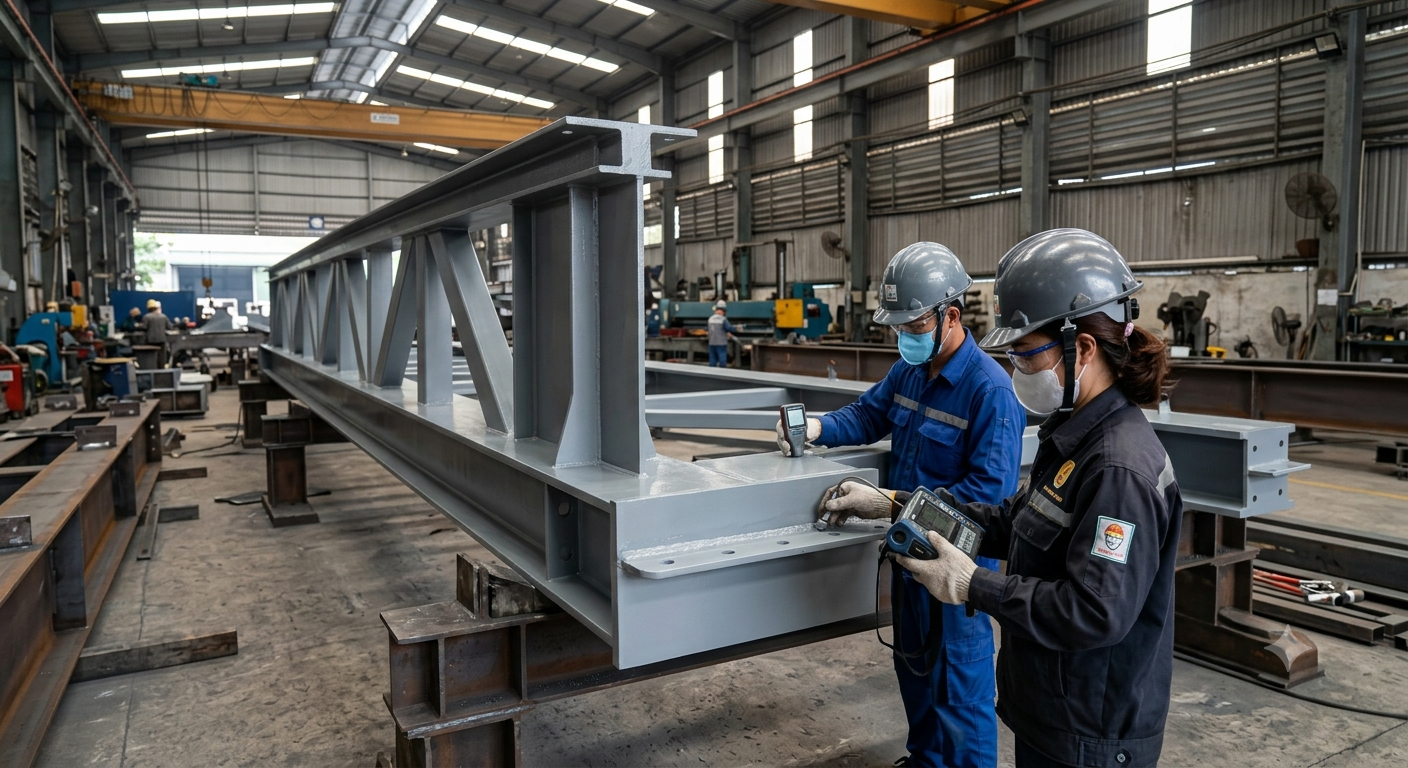
Raw welded steel is vulnerable to corrosion and environmental degradation if left untreated. Therefore, protective finishing and exhaustive quality checks are mandatory before any structural member leaves the facility.
Blast Cleaning and Protective Coating of Steel Structures
Before applying any protective paint systems, the steel surfaces must be thoroughly prepared to remove mill scale, rust, oil, and impurities. The standard method involves mechanical abrasive blast cleaning in specialized enclosed chambers, which achieves a specific surface profile that enhances paint adhesion. Once cleaned, the steel is quickly coated with an anti-corrosion primer, followed by intermediate and finish coats tailored to the environmental exposure conditions of the project site, whether standard industrial atmospheres or corrosive coastal environments.
Trial Assembly and Factory Dispatch
To prevent costly delays and fitting issues during site erection, complex or critical structures often undergo a rigorous trial assembly process inside the factory yard. Quality control engineers bolt mating sections together to verify joint alignments, overall dimensions, and camber tolerances. Once the trial assembly passes inspection, components are marked with identification numbers corresponding to the erection drawings, carefully bundled, and loaded onto transport vehicles for dispatch to the construction site.
Frequently Asked Questions About the Steel Structure Manufacturing Process
Conclusion
In summary, transforming structural designs into reliable, high-performance steel components requires a disciplined, multi-stage workflow inside a modern manufacturing facility. From the initial engineering review and material optimization to precision cutting, welding, abrasive blast cleaning, and final quality checks, every phase contributes directly to the safety and longevity of the completed construction. We trust that this overview has provided you with valuable insights into the rigorous standards and technical expertise involved in producing quality steel structures.
Contact information
CÔNG TY TNHH SẢN XUẤT & XÂY DỰNG AP
Address: 348/9 Ung Văn Khiêm, phường Thạnh Mỹ Tây, TP.HCM.
Hotline: 028 7300 3868
Email: design-quotation@apmnc.net, business@apmnc.net
Website: apmnc.net